The University of South Carolina AI Index / JULY 2024
 39
DESCRIPTIVES OF THE SAMPLE. WEIGHTING

The Summer 2024 USC AI Index was conducted June 27 – July 3, 2024, by the College of Information and
Communications at University of South Carolina, using Qualtrics panel respondents. This poll is based
on a nationally representative probability sample of 1,061 adults ages 18+.
The margin of sampling error is plus or minus 3 percentage points at the 95% confidence level, for results
based on the entire sample of adults. The margin of sampling error takes into account the design effect.
The margin of sampling error is higher and varies for results based on sub-samples. Sampling error is only
one potential source of error. There may be other unmeasured non-sampling errors in this or any poll. In
questions that permit multiple responses, columns may total substantially more than 100%, depending
on the number of different responses offered by each respondent.
The study was conducted in English. The data were weighted by age, gender, household income, Census
region, education, occupation, race/ethnicity. We did not weight the sample by vote.
The demographic benchmarks came from 2023 Current Population Survey (CPS) from the US Census
Bureau.


Age. How old are you?
Valid Percent
 18-24 years old 12.0
 25-34 years old 17.5
 35-44 years old 16.0
 45-54 years old 15.1
 55-64 years old 16.6
 65+ years old  22.9

Gender. How do you describe yourself?
    Valid Percent
 Male   50.3
 Female   49.2
 Other   .5

Region (based on ZIP Code & US Census)
Valid Percent
 Midwest  21.0
 Northeast  17.0
 South   38.0
 West   24.0

Education. What is the highest level of education you have completed?
Source: page-041.txt
The University of South Carolina AI Index / JULY 2024
 40
      Valid Percent
 Some high school or less  9.0
 High school diploma or GED  28.0
 Some college, but no degree  15.0
 Associates or technical degree 10.0
 Bachelor’s degree   24.0
 Graduate or professional degree
(MA, MS, MBA, PhD, JD, MD, DDS etc.)  14.0

Occupation. What best describes your current occupation? - Selected Choice
      Valid Percent
 Student    7.4
 White-collar professional  30.0
 Blue-collar worker   13.2
 Freelancer    3.0
 Retired     25.3
 Homemaker    6.0
 Unemployed    11.1
 Other (please specify)   4.1

Income. What was your total household income before taxes during the past 12 months?
      Valid Percent
 Less than $25,000   17.1
 $25,000-$49,999   19.8
 $50,000-$99,999   28.3
 $100,000-$199,999   27.4
 More than $200,000   7.4

Race / ethnicity
      Valid Percent
 AmericanIndian&Other  7.4
 Asian&Pacific    6.7
 Black     11.1
 Hispanic or Latino   18.5
PHOTOGRAPHY CREDITS
Source: page-042.txt
The University of South Carolina AI Index / JULY 2024
 41
 Hawaiian or Other Pacific Islander 2.2
 White     54.1


Figure 39 Source: Summer 2024 USC AI Index. Questions - In politics TODAY, do you consider yourself a Republican,
Democrat, or independent? Recoded categories

There is an increase proportion of independents and a lower ratio of Republicans, as
compared with other studies. We did not weight the sample, based on the vote or
political preferences.


PHOTOGRAPHY CREDITS
COVER: Steve Johnson/Unsplash
P. 2: Omar Houchaimi/Pexels
Pp. 3-4: Tara Winstead/Pexels
P. 7: Kevin Ku/Pexels
P: 17: Growtika/Unsplash
P. 29: Pavel Danilyuk/Pexels
P. 33: Pixabay/Pexels
Republicans
33%
Democrats
49%
Other
18%
Political option
The University of South Carolina AI Index / JULY 2024
 33


THE EFFECT OF AI IN
JOURNALISM AND POLITICS
The survey indicates a divided outlook on AI's influence on the
quality of journalism, with positive influence for 46%, negative
influence for 36%, and no significant impact - for 18%.
Interestingly, skepticism about AI's role in journalism increases
with higher education levels and age, suggesting that more
educated and older respondents are more cautious about the
potential negative effects of AI on journalistic quality.
Source: page-035.txt
The University of South Carolina AI Index / JULY 2024
 34

However, the overall sentiment remains somewhat positive, with a larger portion of the
population leaning towards the belief that AI will enhance rather than undermine journalism
quality.

Figure 33 Source: Summer 2024 USC AI Index. Questions about the AI tools and the quality of journalism

When discussing the impact of AI on specific areas, the survey results reveal mixed opinions
among the public.

12%
34%
23%
13%
18%
0%
5%
10%
15%
20%
25%
30%
35%
40%
Strongly influences for
the better
Moderately influences
for the better
Moderately influences
for the worse
Strongly influences for
the worse
No significant impact
T o what extent do you believe AI can influence the
quality of journalism for better or for worse?
Source: page-036.txt
The University of South Carolina AI Index / JULY 2024
 35

Figure 34 Source: Summer 2024 USC AI
Index. Question - To what extent AI do you
think can contribute to online
misinformation and disinformation?
The concern about AI increasing
online misinformation is
evident, with 46% believing that
AI will heighten misinformation.
Conversely, 33% think AI might
reduce misinformation, while
21% believe AI's impact will be
neutral. The trend shows that
younger respondents feel less
at risk from misinformation,
potentially indicating a gap in
awareness about the dangers of
AI-generated content. Educated
individuals, on the other hand,
show greater apprehension about the rise of misinformation due to AI.

Figure 35 Source: Summer 2024 USC
AI Index. Question - Do you believe
that AI-generated content has the
potential to influence political
views, especially in the context of
future elections?
A significant portion of
respondents believe AI-
generated content could
influence political views,
particularly in the context of
future elections.
Specifically, 61% (37%
"probably yes" and 24%
"definitely yes") think it has
this potential. Only a small
fraction, 13%, dismiss this
possibility ("definitely not"
and "probably not"). Again, notably, younger individuals feel less exposed to the influence of AI-
generated content on political views, possibly making them more vulnerable to subtle
manipulations. In contrast, those with higher education levels are more aware and concerned
about such influences.
These insights underline the complexity of public perceptions regarding AI's role in influencing
information and politics. They highlight the need for heightened awareness and education,
especially among younger demographics, to better navigate the potential pitfalls of AI in
shaping opinions and disseminating information.
3%
10%
37%
24%
26%
0%
5%
10%
15%
20%
25%
30%
35%
40%
Definitely not Probably not Probably yes Definitely yes Neutral
Potential to influence political views
33%
46%
21%
0%
5%
10%
15%
20%
25%
30%
35%
40%
45%
50%
Reduces dis &
misinformation
Increases dis &
misinformation
AI has a neutral effect
Contribution to the
misinformation and
disinformation
Source: page-037.txt
The University of South Carolina AI Index / JULY 2024
 36
Also, public perceptions on the government's role in regulating AI tools like ChatGPT are
notably mixed. According to the survey, 26% worry that the government might over-regulate,
potentially stifling innovation and the beneficial applications of AI. The self-labeled Republicans
are even more concerned than the average American (40%).
Conversely, 38% of respondents are concerned that the government will not go far enough in
regulating the use of AI, indicating a desire for more stringent oversight to manage potential
risks and ethical considerations. Self-labeled Democrats are interested in a higher regulation in
proportion of 48%.

Figure 36 Source: Summer 2024 USC AI Index. Question - As chatbots like ChatGPT become more widespread, which is your
greater concern of the following?

20%
40%
26%
32%
29%
36%
48%
31%
38%
0% 10% 20% 30% 40% 50% 60% 70% 80% 90% 100%
Democrat
Republican
AVERAGE SAMPLE
Government will go too far regulating their use
Neither. I am not sure
Government will not go far enough regulating their use
Confidence in institutions & MEDIA
Source: page-038.txt
The University of South Carolina AI Index / JULY 2024
 37
CONFIDENCE IN INSTITUTIONS  & MEDIA

Figure 37 Source: Summer 2024 USC AI Index. Questions about the level of confidence in institutions. Results are presented
in order of the average score (higher average in top)

The data on institutional trust shows a clear hierarchy, with universities enjoying the
highest levels of confidence from the public, followed by YouTube, news websites, and
10%
8%
10%
12%
9%
5%
9%
13%
10%
10%
11%
14%
14%
8%
12%
11%
12%
14%
16%
16%
19%
18%
21%
20%
17%
24%
22%
28%
27%
29%
34%
36%
35%
30%
44%
40%
40%
41%
37%
27%
25%
20%
27%
26%
26%
23%
17%
19%
17%
20%
19%
15%
33%
28%
33%
20%
18%
16%
17%
21%
9%
13%
9%
9%
10%
0% 10% 20% 30% 40% 50% 60% 70% 80% 90% 100%
TikTok
X or Twitter
The Republican Party
Facebook
The Government
Major Corporations
The press
The Democratic Party
Business in general
Television news
News websites
YouTube
Universities
Level of confidence in institutions
A great deal Quite a lot A moderate amount Not very much No confidence at all
Source: page-039.txt
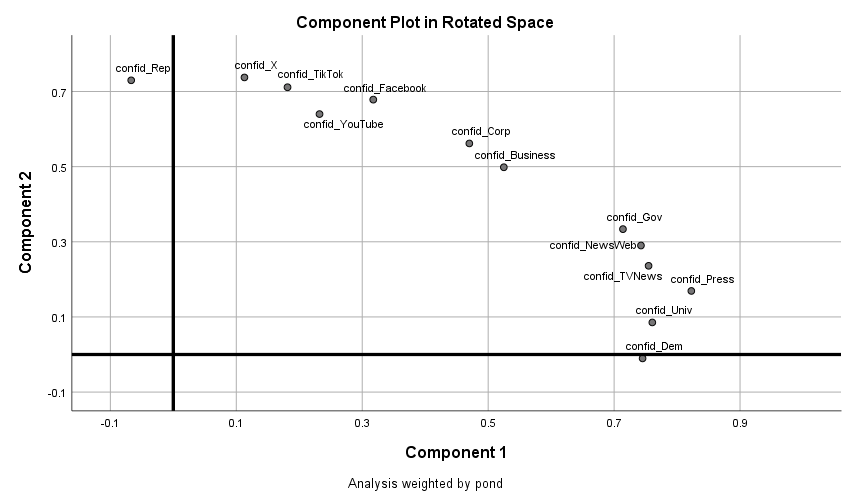
Figure 38. Principal Component Analysis of trust in institutions and media.
The University of South Carolina AI Index / JULY 2024
 38
television news. Conversely, TikTok is at the bottom of the trust scale, indicating
significant skepticism about this platform. Among social media channels, YouTube
stands out as the most trusted, reflecting its perceived reliability and influence.

The principal component analysis (PCA) in the second graph further elucidates the
public's trust patterns. It reveals distinct clusters of trust in various institutions. This
analysis helps understanding the underlying patterns of trust among different
demographic groups. For instance, there are clear divisions between those who trust
traditional institutions like universities, TV news, and government and those who place
their trust in newer, digital platforms like X, TikTok or YouTube. The PCA plot provides a
visual representation of these trust dynamics, highlighting the diverse trust profiles
within the surveyed population.

Figure 38 A Principal Component Analysis (PCA) of survey responses concerning trust in various U.S. institutions. Each point
represents an individual's trust levels, with the x-axis (PC1) capturing the most variance and the y-axis (PC2) showing the
second highest variance. Clusters indicate groups with similar trust profiles, while distances between points reflect
differences in trust levels. Institutions are depicted as vectors, showing their influence on the respondents' positions in the
PCA space. The length and direction of each vector indicate the strength and nature of the relationship between trust in that
institution and the principal components. This visualization reveals underlying patterns and distinct trust profiles among
different demographic or psychographic groups.
The University of South Carolina AI Index / JULY 2024
 29


THE FUTURE OF JOBS IN
COMMUNICATION,
WITH MORE INFLUENCE OF AI ASSISTANTS

The survey reveals mixed expectations about the impact of AI on
jobs in the communication field. Half of the respondents (52%)
fear that AI will reduce the number of jobs due to task
automation.
Ethical considerations in using AI tools
Source: page-031.txt
The University of South Carolina AI Index / JULY 2024
 30

Figure 29 Source: Summer 2024 USC
AI Index. Question - Considering the
increasing use of AI assistants in
tasks like writing emails, creating
content, or managing social media,
how do you think these technologies
will affect jobs in the communication
field?
Meanwhile, 29% expect AI to
transform existing jobs,
requiring new skills and
changing job roles.
Additionally, 13% believe AI
will create more jobs by
enhancing human
capabilities and opening
new opportunities.
Overall, a dominant portion
of respondents anticipates
significant changes, whether
through job reduction or
transformation. Only a small minority (6%) believes that AI will have no significant impact on
jobs in the communication field. Interestingly, older respondents are much more likely than the
average to think that AI tools will have no influence on jobs in this domain, highlighting a
generational divide in perceptions about the future of AI in the workplace.


ETHICAL CONSIDERATIONS IN USING AI TOOLS

Figure 30 Source: Summer 2024 USC AI Index. Questions about the privacy and ethical problems.
31%
12%
27%
69%
88%
73%
0%
10%
20%
30%
40%
50%
60%
70%
80%
90%
100%
Do you use AI for creating content
for personal use? (e.g., personal
projects, learning or entertainment)
Have you encountered any privacy
issues with AI assistants, so far?
Are you aware of ethical guidelines or
best practices for AI use in your field?
Yes No
13%
29%
52%
6%
0%
10%
20%
30%
40%
50%
60%
AI will create
more jobs by
enhancing human
capabilities and
opening up new
opportunities
AI will transform
existing jobs,
requiring new
skills and changing
job roles
AI will reduce the
number of jobs,
as many tasks will
become
automated
AI will have no
significant impact
on jobs in the
communication
field
Mixed expectations for the future, in the
communication field
AI helps or hurts?
Source: page-032.txt
The University of South Carolina AI Index / JULY 2024
 31
The results indicate that a significant portion of the public has mixed views regarding the ethical
use of AI. Only 12% have encountered privacy issues with AI assistants and 27% of the
respondents are aware of ethical guidelines or best practices for AI use in their field. The survey
reveals that women and those with higher education levels are more likely to consider AI as
unethical. Conversely, individuals working in science and technology, as well as the male
demographic, are less concerned about AI ethics, indicating a potential divide in ethical
considerations based on gender, education, and professional background.

Figure 31 Source: Summer 2024 USC AI Index. Question - How much do you believe that AI will act according to ethical
standards and values? (With 1 being lowest and 100 being highest, assigning any number in between to represent your
confidence in AI ethics) Average – 46.5

AI HELPS OR HURTS ?

Figure 32 Source: Summer 2024 USC AI Index. Questions about the effect of AI for different tasks
19%
18%
28%
22%
13%
0%
5%
10%
15%
20%
25%
30%
0-19 20-39 40-60 61-80 81-100
Y our confidence in AI ethics
36%
38% 38%
43%
34% 35%
21%
28% 27%
0%
5%
10%
15%
20%
25%
30%
35%
40%
45%
50%
For people finding accurate
information online
For people doing their jobs more
creatively
For students learning better
The efect of AI - mixed perceptions, with more people having
positive attitudes about the influence of AI
AI helps more that it hurts Not sure AI hurts more than it helps
Source: page-033.txt
The University of South Carolina AI Index / JULY 2024
 32
Overall, the public remains divided on AI's benefits and drawbacks. Interestingly, men tend to
have a more positive view of AI's impact, but the balance of opinions is relatively consistent
across different demographic groups, which might suggest a nuanced understanding of AI's
potential and challenges among the broader population.
The University of South Carolina AI Index / JULY 2024
 16


CHATGPT & OTHER  AI TOOLS

The survey indicates that awareness of ChatGPT, a generative AI
tool, varies significantly among respondents. While 25% of the
public has heard a moderate amount about AI tools, half of the
sample, 50%, has either heard only a little (33%) or nothing at all
(17%).
Source: page-018.txt
The University of South Carolina AI Index / JULY 2024
 17

Figure 13 Source: Summer 2024 USC AI Index.
Question - How much, if anything, have you
heard about ChatGPT, an artificial intelligence
(AI) tool used to create text?
In contrast, among younger
individuals, the number of those
who have heard about AI tools (more
specific, about ChatGPT) is double
compared to the sample average,
highlighting a significant
generational gap in awareness and
familiarity with generative AI
technologies.


Figure 14 Source: Summer 2024 USC AI Index. Question - Do you think it is acceptable for professionals to use ChatGPT or
other AI tools for...

The survey results indicate varying levels of acceptance for professionals using ChatGPT or
other AI tools. A significant majority, 73%, find it acceptable for translation or summarization
tasks, while 64% support using AI for generating ideas, and 60% for creating content for
communication. However, a notable minority remains skeptical, with 27% to 40% of
respondents not considering it acceptable. This skepticism is particularly pronounced among
those unfamiliar with these tools, reflecting a broader reticence towards AI among less
informed individuals.
64%
73%
60%
36%
27%
40%
0% 10% 20% 30% 40% 50% 60% 70% 80% 90% 100%
Generating ideas
Translation or summarization
Creating content for communication
Using AI for communication tasks is mostly accepted
Yes No
Not at all
17%
A little
33%
A moderate
amount
25%
A great deal
8%
A lot
17%
Half of the Americans have not
heard a lot about AI
Source: page-019.txt
The University of South Carolina AI Index / JULY 2024
 18

Figure 15 Source: Summer 2024 USC AI Index. Question - Do you think it is acceptable for professionals to use ChatGPT or
other AI tools for...Results for people who thinks that AI has either a positive or negative effect in our society.

61%
22%
55%
25%
59%
29%
14%
52%
20%
48%
14%
48%
0%
10%
20%
30%
40%
50%
60%
70%
80%
90%
100%
Yes, for
Generating ideas
No, for
Generating ideas
Yes, for
Translation or
summarization
No, for
Translation or
summarization
Yes, for Creating
content for
communication
No, for Creating
content for
communication
Those who trust the positive impact of AI are more
likely to agree with its use for various tasks
Positive effect of AI in society Negative effect of AI in society
Using AI tools for different tasks
Source: page-020.txt
The University of South Carolina AI Index / JULY 2024
 19
USING  AI TOOLS FOR DIFFERENT TASKS


Figure 16 Source: Summer 2024 USC AI
Index. Question - Have you ever used
ChatGPT or other AI assistants to help with
your work or study?
The survey reveals that 38% of
respondents have used AI tools
like ChatGPT for work or study
purposes. This includes 12% who
have used it for work, 10% for
studying, and 15% for both work
and studying. Usage is above
average among younger
individuals, people from the
Western region of the United States, and those with medium to high income levels. This
demographic insight suggests that familiarity and comfort with AI tools are higher among these
specific groups.

Figure 17 Source: Summer 2024 USC AI Index. Question - Have you ever used ChatGPT or other AI assistants to help with your
work or study? Responses for each age group in the sample
13% 22%
26%
14%
19%
6%
37% 28% 9%
9%
9%
7%
17%
24%
18%
26% 10%
4%
0%
10%
20%
30%
40%
50%
60%
70%
80%
90%
100%
18-24 years old 25-34 years old 35-44 years old 45-54 years old 55-64 years old 65+ years old
Usage of AI is higher among young generations
Yes, for work Yes, for studying Yes, for both work and studying No, I have not done this
12% 10%
15%
63%
0%
10%
20%
30%
40%
50%
60%
70%
Yes, for work Yes, for studying Yes, for both
work and
studying
No, I have not
done this
38% of respondents have used AI
tools like ChatGPT
ChatGPT vs. other AI assistants
Source: page-021.txt
The University of South Carolina AI Index / JULY 2024
 20


Figure 18 Source: Summer 2024
USC AI Index. Question - What are
the main barriers to adopting AI in
your work or study? Choose the
most important one…
Among the reasons cited
by those who have not
used AI tools, the dominant
argument is a lack of trust,
mentioned by 46% of
respondents. This is
followed by a lack of skills,
noted by 24%. The cost is a
concern for only 9%, likely
because many of these
tools are currently
available for free. This
means that lack of trust
and knowledge are the primary barriers to AI adoption, rather than financial constraints.

CHATGPT VS. OTHER AI ASSISTANTS

Figure 19 Source: Summer 2024 USC AI
Index. Question - Which type of AI
assistant have you used? (Select all that
apply)
The survey results show that
ChatGPT dominates the usage
among AI assistants, with 29%
of respondents reporting having
used it. Usage is higher across
all active age groups. Google
Gemini (or Bard) and Microsoft
Copilot (or Bing) are used by
13% and 11% of respondents,
respectively. Notably, these
tools are more commonly used
Cost
9%
Complexity
8%
Lack of skills
24%
Lack of trust
46%
Other (specify)
13%
Trust and knowledge play a role in AI
adoption
29%
13%
11%
3%
2%
0%
5%
10%
15%
20%
25%
30%
35%
ChatGPT Google
Gemini (or
Bard)
Microsoft
Copilot (or
Bing)
Anthropic
Claude
Other
(specify)
ChatGPT dominates the usage
among AI assistants
AI tools across industries
Source: page-022.txt
The University of South Carolina AI Index / JULY 2024
 21
by individuals aged 45-55 and those working in engineering and scientific industries. Anthropic
Claude is used by 3%, and other AI assistants account for 2% of the usage. These trends
highlight ChatGPT's broad appeal and the specific preferences for other AI tools within certain
professional demographics.

AI TOOLS ACROSS INDUSTRIES

Figure 20 Source: Summer 2024 USC AI Index. The results of using different types of AI tools, for different industries
These findings highlight that professionals in science and technology are the most frequent
users of AI tools, followed by those in sales, communication, and finance sectors. This
distribution reflects the varying needs and adoption rates of AI technologies across different
fields.
23%
30%
20%
37%
39%
31%
48%
61%
47%
53%
6%
4%
8%
13%
18%
18%
12%
14%
17%
34%
5%
6%
11%
12%
10%
18%
5%
3%
15%
28%
0% 20% 40% 60% 80% 100% 120% 140%
Services (e.g., restaurant, caretakers, tourism etc)
Creative Arts (e.g., art, design, entertainment, music)
Education and Training (e.g., teaching, educational
content creation)
Production and Manufacturing (e.g., agriculture, industrial
production, manufacturing)
Legal and Administrative (e.g., legal services,
administrative support)
Healthcare and Wellness (e.g., medical services, mental
health)
Finance and Banking (e.g., banking, investment, insurance)
Communication and Media (e.g., journalism, public
relations, broadcasting)
Sales and Marketing (e.g., retail, advertising, market
research)
Science and Engineering (e.g., research and development,
engineering)
AI assistant distribution accross industries
ChatGPT Google Gemini (or Bard) Microsoft Copilot (or Bing) Anthropic Claude
Source: page-023.txt
The University of South Carolina AI Index / JULY 2024
 22

Figure 21 Source: Summer 2024 USC AI Index. Level of use of 4 AI tools & level of satisfaction with using this AI
The survey results indicate varying levels of satisfaction with different AI assistants when
recalculating the proportions of dissatisfied users.
- ChatGPT: 29% of respondents have used it, with 22% expressing satisfaction. This
leaves 7% who are dissatisfied, which translates to 24% of ChatGPT users.
- Google Gemini (or Bard): 13% have used it, with 9% satisfaction, leaving 4%
dissatisfied, or approximately 30% of its users.
- Microsoft Copilot (or Bing): 11% of respondents have used it, with 9% satisfaction,
resulting in 2% dissatisfaction, or about 18% of its users.
- Anthropic Claude: 3% have used it, with 1% satisfaction, leaving 2% dissatisfied,
translating to approximately 67% of its users.
Among these four AI tools, Microsoft Copilot has the lowest proportion of dissatisfied users
at 18%, indicating the highest overall user satisfaction compared to the other AI assistants.


ChatGPT Google Gemini
(or Bard)
Microsoft
Copilot (or
Bing)
Anthropic
Claude
Type of AI assistant used 29% 13% 11% 3%
Satisfaction with using this AI 22% 9% 9% 1%
29%
13% 11%
3%
22%
9% 9%
1%
0%
5%
10%
15%
20%
25%
30%
35%
Microsoft Copilot has the lowest proportion of
dissatisfied users
The effects & challanges of using AI tools
Source: page-024.txt
The University of South Carolina AI Index / JULY 2024
 23
THE EFFECT S & CHALLANGES OF USING AI TOOLS

Figure 22 Source: Summer 2024 USC
AI Index. Question - How has this AI
assistant affected your productivity
at work or study?
The survey results indicate
that AI tools have generally
improved productivity for
about two-thirds of the
respondents. For ChatGPT
users - 68% reported
increased productivity. For
Google Gemini users: 75%
experienced improved
productivity. And for
Microsoft Copilot users: 76% saw productivity gains. This suggests that those who have used AI
tools report higher productivity scores overall. Among these tools, Microsoft Copilot users
reported the highest improvement in productivity. This indicates a strong correlation between
the use of AI assistants and perceived enhancements in work or study efficiency.


Significantly
improved
22%
Somewhat
improved
42%
Somewhat
worsened
11%
Significantly
worsened
1%
Neither
improved or
worsened
24%
64% of people experienced increased
productivity with AI
Source: page-025.txt
The University of South Carolina AI Index / JULY 2024
 24

Figure 23 Source: Summer 2024 USC AI Index. Question - Have you faced any of the following challenges in integrating AI into
your work or study? (Select all that apply)

The survey results indicate that the most common challenges in integrating AI into work or
study involve the complexity of requests and the need for constant corrections, each cited by
13% of respondents. This suggests that users (those responding) already have some experience
using these tools. 12% mentioned that AI does not understand or respond appropriately to
complex requests. Other issues include AI not being reliable (7%), responding too slowly (6%),
not maintaining privacy or confidentiality (5%), and hallucinating (inventing stuff that is not real)
(5%). Younger respondents provided more answers to this question than older respondents,
confirming that the newer generations use these tools more extensively. This trend highlights
the growing adoption of AI tools among younger demographics, who are more likely to
encounter and report these challenges.


0%
5%
5%
6%
7%
12%
13%
13%
0% 2% 4% 6% 8% 10% 12% 14%
Other (please specify)
AI is hallucinating (inventing stuff that is not real)
AI does not maintain privacy or confidentiality
AI responds too slowly
AI is not reliable
AI does not understand or respond appropriately to
complex requests
AI responses need a lot of correcting
I have not experienced any challenges
Main challenges when using AI for work or study
Using AI tools for communication
Source: page-026.txt
The University of South Carolina AI Index / JULY 2024
 25
USING AI TOOLS FOR COMMUNICATION
When examining the differences across
industries, notable variations emerge.
Communication and Media lead the
way, with 71% of respondents using AI
tools for content creation. This high
engagement might suggest the
industry's reliance on AI for enhancing
productivity. Half of those working in
communications and media admit to
using these AI tools daily, highlighting
their integral role in the industry. The
trend reflects the industry's rapid
adoption and integration of AI
technologies.


Figure 25 Source: Summer 2024 USC AI Index. Question - Have you ever used ChatGPT or other AI assistants to help with
creating communication content?

Services follow with 50%, indicating a balanced adoption rate for content creation purposes. In
Science and Engineering, 47% have utilized AI tools. In contrast, Healthcare and Wellness
13%
25%
27%
28%
33%
36%
37%
39%
46%
47%
50%
71%
87%
75%
73%
72%
67%
64%
63%
61%
54%
53%
50%
29%
0% 10% 20% 30% 40% 50% 60% 70% 80% 90% 100%
Other industry
Healthcare and Wellness
Education and Training
NATIONAL AVERAGE
Creative Arts
Finance and Banking
Legal and Administrative
Production and Manufacturing
Sales and Marketing
Science and Engineering
Services
Communication and Media
Differences in adopting AI tools for industries
Yes (for work/study) No, I have not done this
11%
8%
9%
72%
0% 20% 40% 60% 80%
Yes, for work
Yes, for studying
Yes, for both work and
studying
No, I have not done this
28% have used ChatGPT or other
AI assistants to help create
communication content
Figure 24 Source: Summer 2024 USC AI Index. Question - Have you
ever used ChatGPT or other AI assistants to help with creating
communication content?
Source: page-027.txt
The University of South Carolina AI Index / JULY 2024
 26
show a lower adoption rate at 25%. Similarly, in Education and Training, where the
respondents were primarily educators and not students, only 27% admitted that they have used
AI tools, suggesting a cautious approach towards AI in educational content creation. Thus,
while AI is embraced in certain industries for its productivity and creative potential, others
remain hesitant, potentially due to specific industry challenges or concerns.


Figure 26 Source: Summer 2024 USC AI
Index. Question - Have you ever used
ChatGPT or other AI assistants to help with
creating communication content?
The survey reveals that students
are the primary beneficiaries of
AI tools like ChatGPT, with 61%
using them for creating
communication content.
Following closely are white-
collar professionals, such as
office workers and managers,
with 40% utilizing these tools.
Blue-collar workers also show
notable usage at 45%, indicating
that AI tools are beneficial across
a range of professions. In
contrast, homemakers (16%),
the unemployed (9%), and
retirees (9%) report significantly
lower usage rates, highlighting a
clear divide in AI tool adoption
based on occupation.
9%
9%
16%
28%
29%
40%
45%
61%
91%
91%
84%
72%
71%
60%
55%
39%
0% 20% 40% 60% 80% 100%
Retired
Unemployed
Homemaker
NATIONAL AVERAGE
Freelancer (independent
contractor, gig worker)
White-collar professional (e.g.,
office worker, manager,
professional)
Blue-collar worker (e.g., manual
labor, tradesperson)
Student
Differences in adopting AI tools for
occupations
Yes (for work/study) No, I have not done this
Source: page-028.txt
The University of South Carolina AI Index / JULY 2024
 27

Figure 27 Source: Summer 2024 USC AI Index. Among the 28% of respondents who reported using AI tools like ChatGPT -
What types of communication-related tasks do you use ChatGPT or other AI assistants for? (Select all that apply). 292
responses (people who used AI tools for communication content)

This data reflects the diverse applications of AI tools among users who regularly incorporate
them into their workflows, focusing mainly on idea generation and summarizing content. More
complex tasks like programming or art generation are a target for a much smaller group of
respondents.


1%
5%
5%
6%
6%
6%
7%
8%
8%
13%
15%
0% 2% 4% 6% 8% 10% 12% 14% 16%
Other (specify)
Programming (e.g., code, software development)
Art (e.g., digital art, illustrations)
Web or blog articles
Scripts for videos or reports
Writing press releases
Creating bulletpoints for some concepts
Email campaigns
Writing social media posts
Summarising links or longer texts
Generating ideas
Main uses for AI tools
Source: page-029.txt
The University of South Carolina AI Index / JULY 2024
 28

Figure 28 Source: Summer 2024 USC AI Index. Question - How effective do you find AI assistants in aiding your content
creation process for communication tasks? 292 responses (people who used AI tools for communication content)

Among those who reported using AI tools for content creation, nearly half (48%) consider them
to be effective, while 30% find them moderately effective. Only 22% of users are dissatisfied,
deeming the tools not effective. This indicates that a significant majority of users appreciate the
value and efficiency AI assistants bring to their communication tasks, so far.


NOT EFFECTIVE,
22%
EFFECTIVE, 48%
Moderately
effective, 30%
Most users appreciate the AI tools as effective
The University of South Carolina AI Index / JULY 2024
 7


MEDIA USE PATTERNS
The survey results reveal insights into the online behaviors of the
U.S. population. Notably, the number of individuals who actively
create content online—those who write comments, post on
social media, or share links daily or multiple times a day—stands
consistently at around 26-27%. This suggests a segment of the
audience that engages in proactive participatory behavior,
contributing content regularly.
Source: page-009.txt
The University of South Carolina AI Index / JULY 2024
 8

Figure 2 Source: Summer 2024 USC AI Index. Question - How often in the last week did you ... (read news, read comments,
write comments, post on social media, share links)

In contrast, the audience that consumes information is significantly larger. Approximately 48-
61% of respondents read news on digital platforms or read comments on social media daily or
multiple times a day. This indicates a substantial portion of the population that engages
primarily as consumers of content rather than creators.
This distinction between content creators and content consumers highlights different levels of
engagement within the digital landscape. While a dedicated minority drives much of the user-
generated content, a larger group consistently seeks out and consumes this information.
Understanding these dynamics is crucial for comprehending the broader patterns of online
interaction and information dissemination. The audience that generates communication
content consistently (daily or multiple times a day) tends to be younger, with lower educational
attainment, and lower income levels compared to the average sample. Additionally, this group
is more likely to self-identify with political affiliations as either Democrat or Republican. This
demographic insight underscores the proactive engagement of younger, less affluent
15%
34%
13% 14% 12%
23%
27%
13% 13% 14%
37%
26%
27%
31% 31%
13%
2%
7%
8% 9%
12% 11%
40%
34% 34%
0%
10%
20%
30%
40%
50%
60%
70%
80%
90%
100%
Read news on digital
platforms (websites,
social media, etc.)
Read comments on
articles or posts on
social media?
Write comments on
articles or posts on
social media?
Post on social media
or websites?
Share or forward
links to news articles
or posts on social
media?
Digital media use patterns in the US
Multiple times a day Daily From time to time Once Never
Source: page-010.txt
The University of South Carolina AI Index / JULY 2024
 9
individuals in creating online content, often aligning themselves more distinctly along political
lines.

Figure 3 Source: Summer 2024 USC AI Index. Question - Which of the following digital media platforms did you use to access
news in the last week? (Select all that apply / multiple choice)

The survey results, consistent with the findings of the Reuters Digital News Report 2024,
highlight that Facebook and YouTube are the leading platforms for accessing news among
Americans, with nearly half of the sample using these platforms regularly. It is noteworthy that
there is a higher-than-average proportion of younger audiences (under 35 years old) who rely on
most social media platforms for news. Conversely, older adults tend to prefer traditional news
websites.

8.9
9.4
11.5
12
12.4
14.1
21
24.8
28.1
39.9
48.6
49.2
Others (please specify)
Blogs or online forums
WhatsApp
Podcasts or audio platforms
LinkedIn
Reddit
X (former Twitter)
TikTok
Instagram
News websites
YouTube
Facebook
Facebook and Y ouT ube are the leading platforms for
accessing news among Americans
Source: page-011.txt
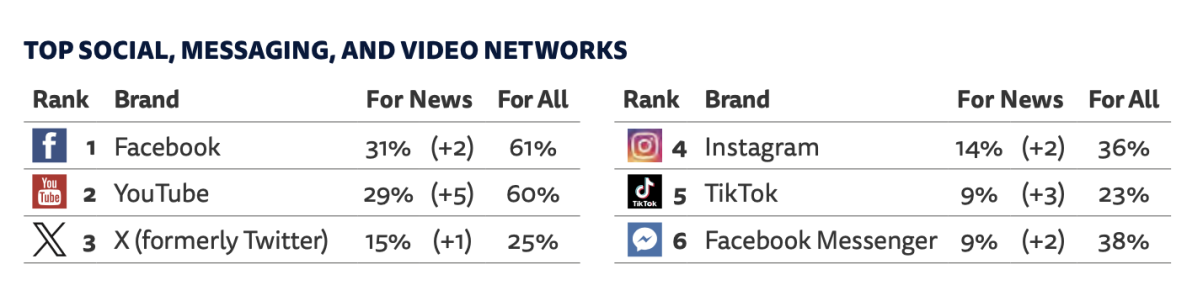
Figure 4. Reuters Digital News Report 2024: platforms mostly used for news in the U.S.
The University of South Carolina AI Index / JULY 2024
 10

Figure 4 Source - Reuters Digital News Report 2024, details about the US media use, indicating that Facebook and YouTube
are the platforms mostly used for news in the US (https://reutersinstitute.politics.ox.ac.uk/digital-news-report/2024)

Interestingly, the age distribution of those using Facebook for news mirrors the overall sample's
age structure, indicating that Facebook's relevance is not diminished among younger users.
This broad appeal underscores Facebook's continued significance as a news source across
various age groups. Thus, while younger audiences dominate the user base for platforms like
YouTube, Instagram, TikTok, and Reddit, traditional news websites and Facebook maintain a
balanced appeal across different age demographics, ensuring a diverse range of users access
news through these channels.


Figure 5 Source: Summer 2024 USC AI Index. Question - What is your main reason for posting on social media or websites?
(Select all that apply)
11%
12%
14%
14%
17%
20%
24%
44%
48%
0% 10% 20% 30% 40% 50% 60%
For personal branding or building a professional network
To promote a business, products, or services
Other (please specify)
To educate or provide tutorials on specific topics
To participate in social or political activism
As a creative outlet or hobby
To entertain or engage with an audience
To share information or personal opinions
To connect with others who have similar interests
The primary motivation for using social media and
digital platforms: connecting with others
Source: page-012.txt
The University of South Carolina AI Index / JULY 2024
 11
The survey highlights that the primary motivation for using social media and digital platforms is
driven by social objectives, such as connecting with others who share similar interests (48%)
and sharing information or personal opinions (44%). Additionally, a significant portion of users
(24%) engage with these platforms for entertainment purposes. These findings are neither new
nor surprising, reinforcing the well-established understanding of social media's role in fostering
connections, discussions, and entertainment.
Science & AI
Source: page-013.txt
The University of South Carolina AI Index / JULY 2024
 12
SCIENCE & AI


Figure 6 Source: Summer 2024 USC AI Index. Question - Overall, would you say science has had a mostly positive effect on
our society or a mostly negative effect on our society?
The survey results reveal a strong consensus that science has a predominantly positive impact
on society. A significant 78% of respondents view science as having either an extremely positive
(38%) or somewhat positive (40%) effect. In contrast, only a small fraction, 5%, perceive
science as having a somewhat negative (4%) or extremely negative (1%) impact. Additionally,
17% of respondents believe that science has neither a positive nor negative effect on society.
Notably, the level of education increases the likelihood of respondents considering science to
have a positive effect.

Figure 7 Source: Summer 2024 USC AI
Index. Question - Overall, would you
say science has had a mostly positive
effect on our society or a mostly
negative effect on our society?
Responses for each ideological
group.
Interestingly, there are no
significant differences in
perception between those
who identify as Democrats
or Republicans. However, it
is worth noting that the small
number of Republicans who
view science negatively is
significant and higher than
38% 40%
4%
1%
17%
0%
5%
10%
15%
20%
25%
30%
35%
40%
45%
Extremely positive Somewhat positive Somewhat negative Extremely negative Neither positive nor
negative
A strong consensus that science has a predominantly
positive impact
81%
74%
86%
3%
11%
2%
16%
16%
12%
0% 20% 40% 60% 80% 100%
Independent
Republican
Democrat
Small differences between
Democrats and Republicans
positive effect negative effect Neither positive nor negative
General perceptions about AI
Source: page-014.txt
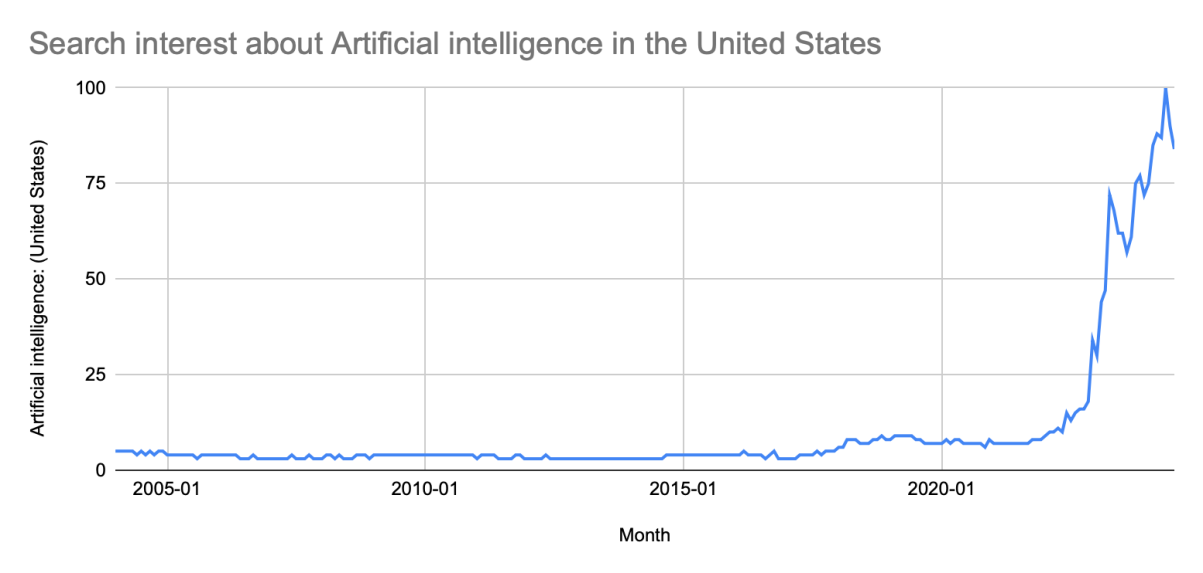
Figure 9. Search intensity related to AI in the United States (Google Trends).
The University of South Carolina AI Index / JULY 2024
 13
the number of Democrats holding the same view.

GENERAL PERCEPTIONS ABOUT AI

Figure 8 Source: Summer 2024 USC AI Index.
Question - How much have you heard or read about
AI?
Despite the topic's omnipresence in
the media and the increased search
activity surrounding it, 31% of
respondents have either not heard at
all (6%) or have heard only a little (25%)
about AI. The survey results indicate
that only a minority of the population
(36%) acknowledges having heard a
significant amount about artificial
intelligence (AI). In comparison, 33%
report having heard a moderate amount. These findings suggest that, although AI is widely
discussed, a substantial portion of the population remains relatively uninformed about it.


Figure 9 The intensity of searches related to artificial intelligence (AI) has increased dramatically and exponentially in the
United States since November 2022, coinciding with the public launch of ChatGPT. Data provided by Google Trends clearly
illustrates this surge, reflecting a growing interest and curiosity about AI technologies among the American public.
6%
25%
33%
14%
22%
0%
5%
10%
15%
20%
25%
30%
35%
Not at all A little A
moderate
amount
A great
deal
A lot
Only a minority have heard
something about the AI
Source: page-015.txt
The University of South Carolina AI Index / JULY 2024
 14

Figure 10 Source: Summer 2024 USC AI
Index. Question - Overall, would you say
technology like Artificial Intelligence has had
a mostly positive effect on our society or a
mostly negative effect on our society?
The survey results regarding the
societal impact of artificial
intelligence (AI) technology
present a nuanced perspective. A
majority of respondents, 47%,
believe that AI has had a positive
effect on society, with 13%
considering it very positive and
34% somewhat positive.
However, 26% of respondents are
neutral, seeing AI's impact as
neither positive nor negative. On the other hand, 27% of respondents view AI's impact
negatively, with 20% identifying it as somewhat negative and 7% as very negative. These results
reflect a divided opinion on AI, and the age difference is essential in this division. Younger
respondents are more likely to view artificial intelligence (AI) as having a positive effect on
society compared to older age groups. Among the 18-24-year-olds, 57% believe AI has a
positive impact. In contrast, only 35% of respondents aged 65 and older share this positive
view.

Figure 11 Source: Summer 2024 USC AI Index. Question - Overall, would you say technology like Artificial Intelligence has
had a mostly positive effect on our society or a mostly negative effect on our society?
57% 62%
45% 55%
36% 35%
25% 17%
25% 21%
33% 38%
18-24 years old 25-34 years old 35-44 years old 45-54 years old 55-64 years old 65+ years old
As age increases, the perception of AI's negative
effects also rises
Subtotal: POSITIVE Subtotal: NEGATIVE
13%
34%
26%
20%
7%
0%
5%
10%
15%
20%
25%
30%
35%
40%
Very
positive
effect
Somewhat
positive
effect
Neither
positive or
negative
Somewhat
negative
effect
Very
negative
effect
So far,  Artificial Intelligence has
had a mostly positive effect on
our society
Source: page-016.txt
The University of South Carolina AI Index / JULY 2024
 15
Older individuals are more skeptical about the benefits of AI, highlighting a generational divide
in attitudes towards this technology. Similarly, we observe differences in perception across
other categories. Negative perceptions of AI are more prevalent among individuals with lower
incomes and those without higher education. These groups are more likely to view AI's impact
as somewhat or very negative, suggesting that socioeconomic factors play a significant role in
shaping attitudes towards AI.


Figure 12 Source: Summer 2024 USC AI Index.
Question - Overall, would you say the increased use
of artificial intelligence tools in daily life makes you
feel…
The survey reveals mixed feelings about
the increased use of artificial
intelligence (AI) tools in daily life. While
48% of respondents feel equally
concerned and excited, 35% are more
concerned than excited. These
concerns increase with age, lack of
education, and economic disparities,
highlighting the need to address these
issues to foster a more balanced
perspective on AI in the future. Only
17% of respondents feel more excited than concerned.


17%
48%
35%
0%
10%
20%
30%
40%
50%
60%
More excited than
concerned
Equally concerned
and excited
More concerned
than excited
Mixed feelings about the
increased use of AI
The University of South Carolina AI Index 2024, conducted by the College of Information and Communications provides a new perspective and new analysis of the use and perception of artificial intelligence (AI) in communication within the United States. The survey, which gathered responses from 1061 U.S. residents, highlights insights into AI’s impact on news consumption, social media engagement and professional communication tasks.
Key Findings 1. Awareness and Perception of AI Despite the increased media coverage, 31% of respondents have limited awareness of AI, with 6% having no knowledge and 25% only a little. Conversely, only 36% report significant familiarity with AI technologies. There is a generational divide in AI awareness: younger individuals (18-24) are more knowledgeable about AI tools like ChatGPT compared to older age groups.
2. AI in Professional and Academic Settings 38% of respondents have utilized AI tools for work or study, with higher usage reported among younger individuals, those from the Western U.S., and those with medium to high income levels. The primary barriers to AI adoption include a lack of trust (46%) and skills (24%), overshadowing financial concerns. Among the predictors, social media engagement shows a strong positive association with AI assistant usage. Individuals who are more engaged on social media are significantly more likely to use AI assistants. Age has a notable negative effect on the likelihood of using AI assistants: older people are less likely to use AI assistants than younger people. Education level is positively correlated with usage: higher education levels increase the probability of using AI assistants. Income similarly shows a positive and significant correlation. Political engagement, irrespective of the specific orientation, is associated with increased AI assistant usage. Trust in universities also has a positive impact on the likelihood of using AI assistants.
3. Impact on Productivity and Challenges The survey reveals that ChatGPT is by far the most well-known and widely used AI tool. Its usage is double that of Google Gemini and nearly triple that of Microsoft Copilot. AI tools are perceived to enhance productivity, with Microsoft Copilot users reporting the highest improvement rates (76%), followed by Google Gemini users (75%), and ChatGPT users (68%).
Source: page-005.txt
The University of South Carolina AI Index / JULY 2024
 4
Key challenges in using AI include handling complex requests and ensuring accuracy,
with 13% of users noting frequent corrections needed.
4. AI in Content Creation
71% of professionals in Communication and Media use AI for content creation. Daily
usage is high among these professionals. AI tools are also widely used in Science and
Engineering (47%), Services (50%), and Finance (36%).
5. Ethical and Privacy Concerns
Only 27% of respondents are aware of ethical guidelines for AI use in their field. Ethical
concerns are more prevalent among women and those with higher education levels.
Privacy issues have been encountered by 12% of users, highlighting the need for robust
ethical frameworks and user education.
6. The influence over Journalism
Public opinion on AI's role in journalism is divided: 46% see a positive influence, 36%
see a negative impact. 46% fear AI increases misinformation, though 33% believe AI
could help reduce it. Higher trust in the press and universities is associated with a more
positive perception of AI's impact on journalism.
Belief that AI influences political views correlates with a more negative perception of its
impact on journalism.
The perception that AI increases the spread of misinformation has a strongly negative
correlation, suggesting that concerns about misinformation are associated with a more
negative view of AI's impact on journalism.
7. Future of Jobs in Communication
52% fear job reductions due to automation, while 29% expect job transformation
requiring new skills. Older respondents are more skeptical about AI's impact on job
markets compared to younger individuals. Higher trust in science, government, and
universities corresponds to a lower likelihood of believing AI will reduce jobs. Social
media engagement correlates with fewer concerns about job reductions. There are
gender differences. Males are less likely than women to believe that AI will reduce jobs.
Higher income individuals are slightly less likely to believe that AI will lead to job
reductions.
Implications
Our findings underscore the need for increased AI literacy and trust-building measures.
The survey highlights the necessity for ethical standards and regulatory frameworks to
manage the integration of AI into communication. Understanding public perceptions
can guide policymakers and developers in creating balanced, inclusive AI strategies
that address societal concerns while maximizing technological benefits. The findings
from this survey can inform future developments in AI technology and its application in
the communication industry. In summary, this survey offers a comprehensive analysis
of AI's role in communication within the United States, providing critical insights that
can guide future advancements in this rapidly evolving field.
About this initiative
Source: page-006.txt
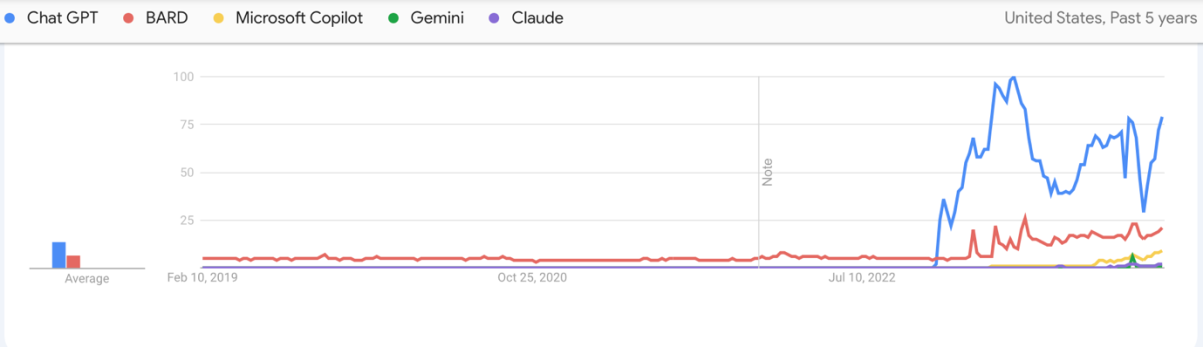
Figure 1. Interest in different forms of Generative AI in the U.S. in recent years (Google Trends data).
The University of South Carolina AI Index / JULY 2024
 5

ABOUT THIS INITIATIVE

This research initiative is aimed at understanding the utilization and impact of some
specific form of AI - large language models (LLMs), such as OpenAI's ChatGPT, Google's
Gemini (former Bard), and other AI specialized in generative AI for communication, on
content creation and communication practices in the United States. Through a
biannual national survey, supplemented by social media listening in a later phase, this
project examines the ways in which individuals and organizations leverage AI
technologies for various communication purposes.


Figure 1 Interest in different forms of Generative AI in the US, in the last years. Google Trends data

The College of Information and Communications at the University of South Carolina
intends to repeat this survey periodically to monitor the evolution of AI perceptions and
usage patterns over time. Future research will focus on tracking changes in public
sentiment, identifying emerging trends in AI adoption across different sectors, and
examining the long-term impacts of AI on communication practices. By continuously
gathering data, the college aims to provide valuable insights that can inform policy
decisions and technological advancements, ensuring that AI developments align with
societal needs and ethical considerations.
How We Did This
Source: page-007.txt
The University of South Carolina AI Index / JULY 2024
 6
HOW WE DID THIS

The AI Index explores various aspects of AI, including its impact on news consumption, social media
engagement, and professional tasks related to communication. It aims to gather data on the frequency of
AI tool usage, the types of tasks AI assists with, and the overall sentiment towards AI's role in
communication.
Survey Design and Coordination
This survey was designed by a team of experts led by Dr. Dan Sultanescu and Dr. Linwan Wu, from the
College of Information and Communications, University of South Carolina. The primary objective was to
measure the use and perception of artificial intelligence (AI) in communication within the United States.
We appreciate the support of Prof. Randy Covington and the expertise of the statistics and
communication specialists from the Social Monitor team in Romania, Dr. Dana Sultanescu and Dr.
Andreea Stancea, for their contributions. Additionally, we are grateful for the support and
encouragement from Dean Tom Reichert, whose assistance was instrumental in moving this project
forward and keeping us on track.
Methodology
The survey was conducted in the last week of June, 2024 using the Computer-Assisted Web Interviewing
(CAWI) method via the Qualtrics platform. A total of 1,061 complete responses were collected. It is
important to note that online samples tend to under-represent the opinions and behaviors of people who
are not online (typically those who are older, less affluent, and have limited formal education). Moreover,
because people usually opt in to online survey panels, they tend to over-represent people who are well
educated and socially and politically active.
Sampling and Data Collection
The survey sampled respondents across different age groups, genders, and regions in the United States.
It included individuals from various educational backgrounds and professional fields, ensuring a
comprehensive overview of AI usage and perceptions.
Weighting and Representativeness
The database was weighted to be representative of the U.S. voting population based on the most recent
U.S. Census data. Adjustments were made for age, gender, education, ethnicity/race, location, income,
and occupation type. These adjustments were relatively small, ensuring that the results accurately
reflect the population.
Data Analysis
For our data analysis, we started by weighting the database for representativeness. We then generated
descriptive statistics for all variables to understand the dataset better. Using crosstabulation, we
examined relationships between variables and identified significant patterns. We conducted exploratory
factor analysis to uncover underlying structures and tested these connections with correlation analyses.

We also built logistic regression models to identify significant influences on the use of AI tools,
perceptions of AI's impact on journalism, and concerns about AI's influence on journalism. This
approach allowed us to derive valuable insights into the factors shaping these opinions.